Breast cancer is the leading cause of death of women in the
entire world today. More than a million women are afflicted every year with
North America having the highest incidence rate with one out of eight women
getting the disease. Next comes the northeastern European countries followed by
Australia and New Zealand. Our country should be proud because we are in the
Top Ten Breast Cancer Hotspots of the world! In fact, we have the highest
incidence rate in Asia - much, much higher than China or Japan.
Yet we are not a highly industrialized as the USA, nor are
we agriculturally productive as Australia, nor do we have a huge wide area of
land with a population as that of China. In fact our country is even an
archipelago surrounded by the China Sea and Pacific Ocean.
The Hereditary Factor is Misleading
If we are to believe medical science, Filipinos must then
have a genetic predisposition for breast cancer. Despite our different
dialects, we must somehow be related to one another to have a high degree of
hereditary factor because breast cancer is afflicting all women from as far
north as Batanes to as far south as Tawi-Tawi.
In fact, breast cancer today tops all cancers for both men and women.
Because of this epidemic situation, our Department of Health has had a Breast
Cancer Desk for more than 15 years – unfortunately just that - a desk.

So, does it have something to do with urbanization? Nope!
The Cordillera Autonomous Region and the National Capitol Region both have
cancer as the 3
rd leading cause of mortality. Population density?
Nope! CAR has the lowest in the country with less than a hundred per square
km., while the NCR has almost 15,000/ sq.km. Poverty? Nope! In the NCR, cities
with the high concentrations of urban poor have similar incidence rates of
cancer as cities with the low concentrations of urban poor. Education? Nope! We have as much affliction among
well-educated women as uneducated women. Being childless? Not at all! Having
children does not prevent breast cancer, as several cases have been diagnosed
shortly after having given birth..
What about Religion? Maybe so, but it isn’t because of
spirituality. Muslims don’t eat pork while Christians do and this could
probably be a reason why the former are less afflicted. So maybe cancer comes
with what we eat? Actually, mounting evidences in the past decade of breast
cancer advocacy in North America have clearly established the environmental
link to breast cancer with as much as 80% of breast cancer cases having been
due to the environmental – meaning what we eat, what we drink and what we
breath.
Breast cancer is a hormonal disease, particularly involving
estrogen. There have been identified specific chemical groups that are estrogen
copycats. Since most of the estrogen receptor sites are located in the breast
area, the lifetime exposure of a woman to foreign environmental estrogens
increases her chances of getting breast cancer. It takes 5-10 years before the
first symptoms appear. The longer a woman lives in a toxic environment, the
greater the risk of getting breast cancer. So do we chop off the breasts once a
woman is born? Do we just remove all her reproductive organs as a preventive measure?
Do we just find ways for her glands to stop the production of estrogen? To what
extent will we interfere with a woman’s body?
Medicine and science has never been challenged as it is
today. The advent of breast cancer
advocacy, which puts forward a patient’s perspective as opposed to a
non-patient’s point of view has resulted in a shifting paradigm.
Breast Cancer is Unacceptable
What is causing breast cancer in the Philippines? Enough
evidence exists to raise serious concern on the environmental link to breast
cancer to make this a priority for investigation and evidence-based regulatory
action.
Why is cancer the leading cause of death in Central Luzon?
Why does Pampanga, particularly Angeles City have the highest incidence rate of breast cancer in the
entire country?
The undetermined volume of “Agent Orange”, a chemical used
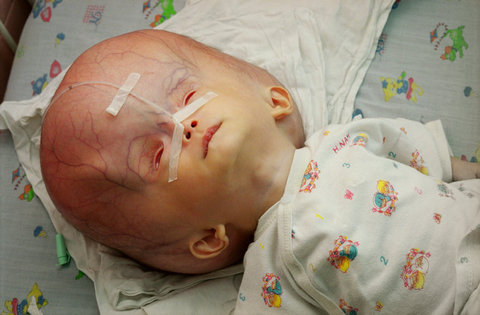
in the Vietnam War by the United States were stocked and flown from the US Air Base. The legacy of Agent Orange has affected the reproductive health of the people of Pampanga, particularly women and children resulting in numerous cases of leukemia, child birth defects and breast cancer. Dioxin is one of the most toxic substance ever created by humans.

What about the Cordillera Autonomous Region? Despite being
in the highlands, the soil, water and air supply have been severely affected by
many years of mercury and cyanide from gold mining and the continuing practice
of pesticides in the vegetable growing areas. At least 10 tons of mercury are released by the entire mining industry annually into the environment. Guihulngan, a very small and sleepy town 100
kms north of Dumaguete has a very high rate of breast cancer. Just across this sleepy
town is Atlas Mining, now shut down due to environmental damages. The 6.9 MG earthquake that hit Guihulngan on February 2012 have most likely released and further caused the spread of mercury and cyanide that had accumulated over the years in the water table of this town. Expect an increase of breast cancer in Guihulngan and nearby areas in the coming years!

And the National Capitol Region? Surrounded by the one of
the most polluted and contaminated bodies of waters in the entire world –
Manila Bay, Pasig River and Laguna Lake – it wouldn’t be difficult to
understand why breast cancer has become an epidemic. San Francisco and New York
have the highest rates of breast cancer in the world and numerous studies have
shown the toxicity of their bodies of water, primarily caused by toxic
dump sites five decades ago. The typhoon on August 2012 brought back to the tourist boulevard of Manila Bay all the trash for the world to see.
What is even most
particular to the Philippines is the government’s population control program of
oral and inject able contraceptives. Thousands
upon thousands of women have been put to great risk with the early and
prolonged use of the pill, undeniably a risk factor for breast cancer.
Furthermore, numerous women are required chest x-rays for pre-employment,
pre-enrollment and annual check-up’s as against selective screening. The
supposed minimal amount of radiation cannot be discounted because it is never
dose-related but a matter of timing of exposure. These periodic amounts
radiation of women’s breasts have put so many at great risk.
Population, Poverty and Pollution
As our country grapples with a sinking economy that has
impoverished the vast majority of our people, health safety has become a class
privilege in the pursuit of work. Thousands of migrants to urban settlers have
had to live in subhuman conditions, eat unhealthy foods, drink contaminated
water and toil in unsafe working environments. Thousands of the rural
population have had to allow the devastation of their bays, rivers and
mountains by various industries.
From being an environmentally sound archipelago just a
century ago with natural resources so vast and plenty, the Philippines is fast
becoming an ecological disaster whose signs are now clearly seen in it’s people
health, with breast cancer as the tip of the iceberg.
Wherever and whenever in the country the PBCN has conducted
symposiums, the matter of health and the environment has not only clarified
misconceptions but has also empowered women in taking strong actions to prevent
their daughters from getting breast cancer.
“Ang Hinaharap ay Ipaglalaban!”
With the establishment in 1997 of the Philippine Breast
Cancer Network, which advocates a preventive approach towards the eradication
of breast cancer, the landscape of breast cancer in the Philippines has
significantly changed. Identifying and eliminating the causes of breast cancer has
now become more urgent than seeking the cure.
Corollary to this, government and industry will sooner or
later adhere to the Precautionary Principle – that of acting upon evidence
rather than waiting for absolute proof. The medical profession will also sooner
or later adhere to the patient’s Right to Informed Consent – that of full
disclosure of all information and options, and most importantly, total respect
for her decision.
Numerous scientific studies showing the environmental have already been presented in more than five World Conferences on Breast Cancer held in North America since 1997. Just a few days ago, the US Senate has passed the Safe Chemicals Act which shifts the burden of proof from government agencies to producers and manufacturers to prove their products are safe for public use and consumption.
In the Philippines? The current President would rather lift the ban on mining and simply provide funds for women who will get breast cancer!
Is this having more fun in the Philippines or is it just being funny in the Philippines?
Breast Cancer is no fun at all !!!